Scaling Future with Innovation
9. Zipline’s $21.5 Billion Lesson: The Real Value Is in the Network
Why FlyNow is building more than an aircraft and why disciplined execution matters
Yvonne Winter · CEO, FlyNow · November 13, 2026
Download PDF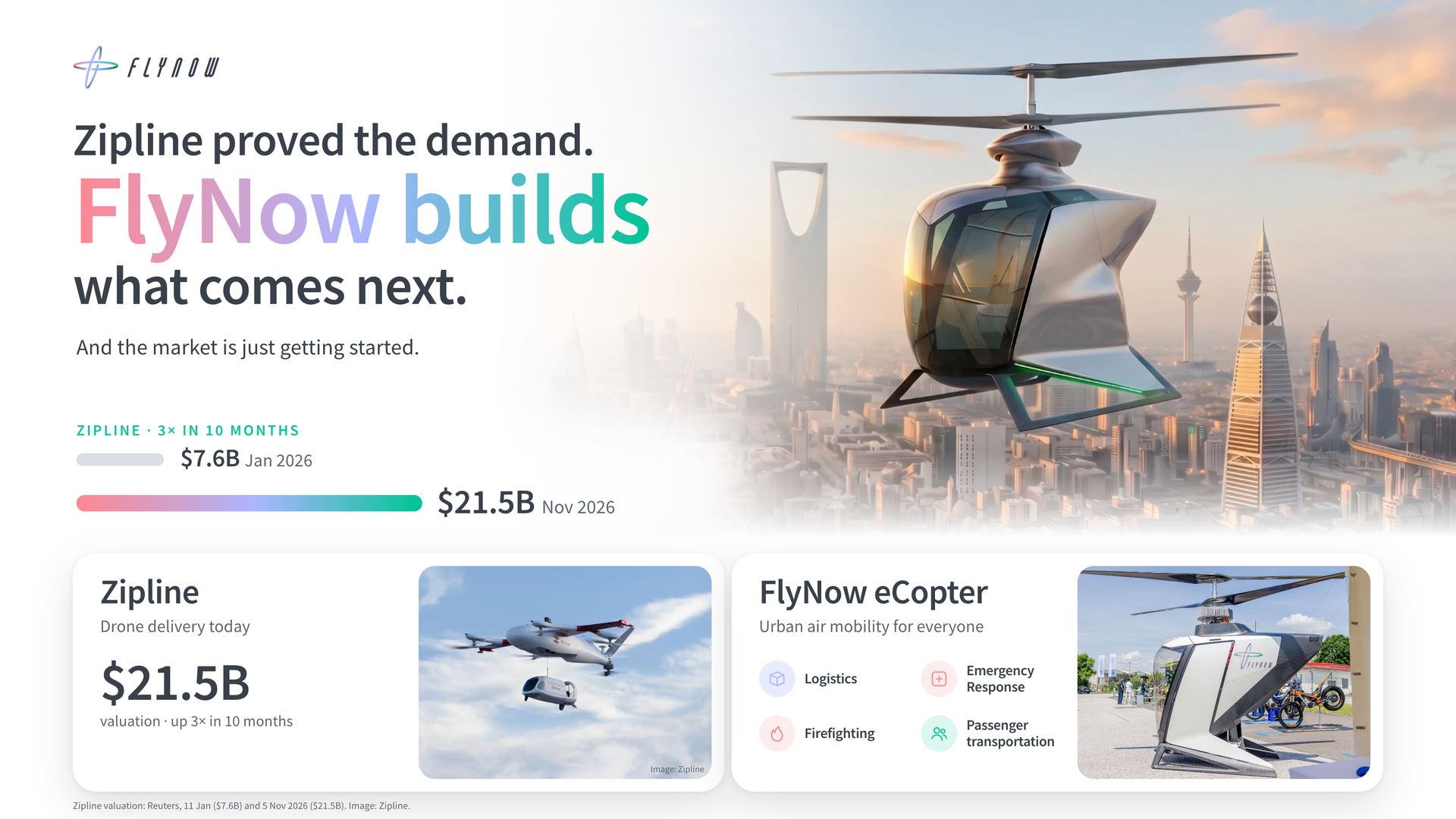
The market does not reward aircraft alone. It rewards the networks that make them useful, trusted and scalable!
The lesson behind the headline
Zipline’s latest $1.5 billion financing round, at a reported valuation of $21.5 billion, sends a signal to the entire Advanced Air Mobility industry. But the most important lesson is not the size of the number. It is what the number represents.
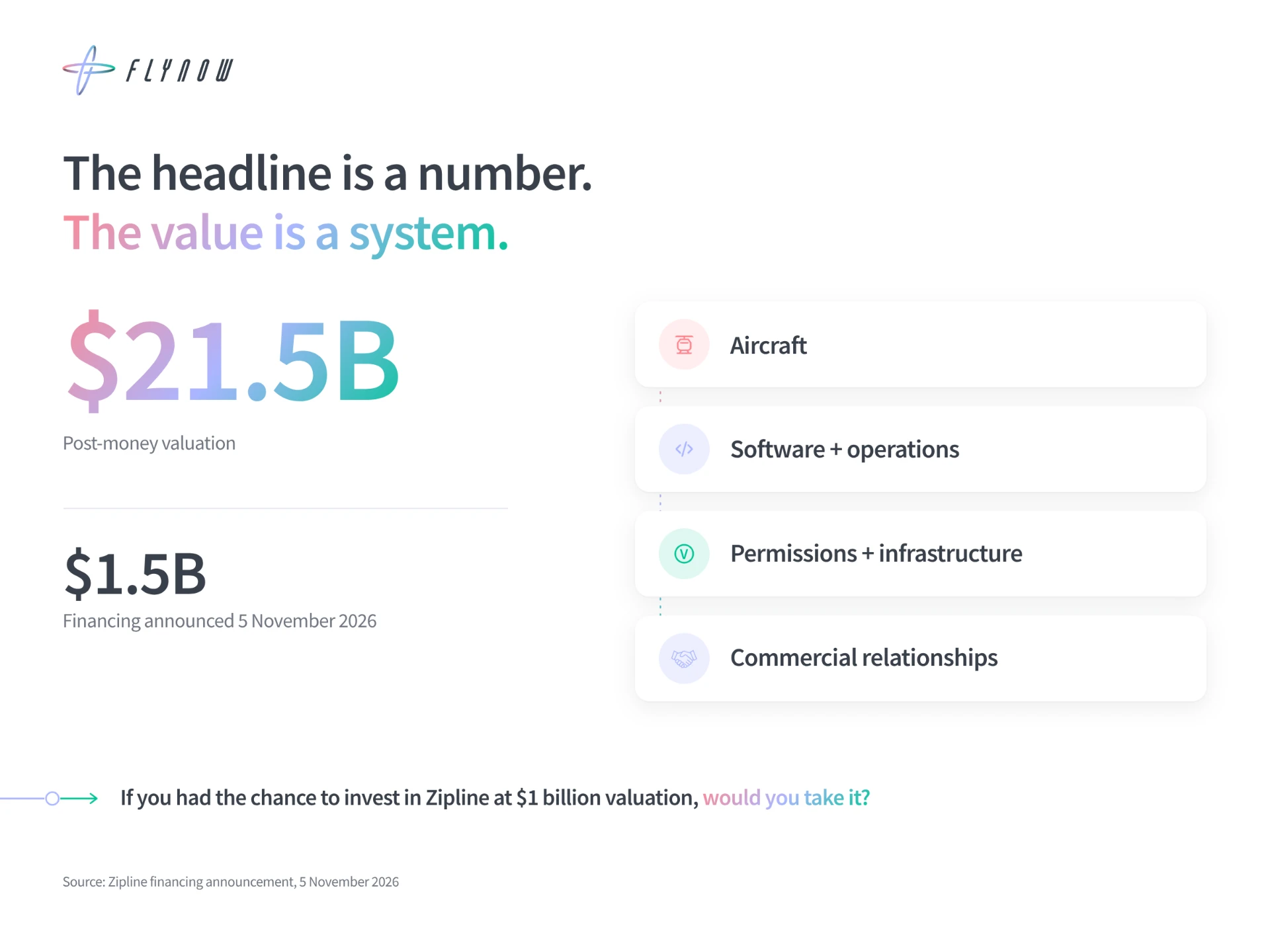
Strip away the headlines and the celebration, and one principle stands out: the market does not assign extraordinary value to aircraft alone. It rewards networks. Aircraft, software, operating history, regulatory permissions, infrastructure and commercial partnerships (integrated into a functioning system) are what create compounding value.
If you had the chance to invest in Zipline at $1 billion valuation, would you take it?
Zipline did not build that position overnight. Its journey from delivering blood by drone in Rwanda to becoming one of the most closely watched companies in the sector has taken roughly a decade. The valuation curve may have accelerated in 2026, but the operational foundation was built over ten years of sustained execution. Anyone promising a shortcut past that timeline is selling a different story.
My sincere appreciation and congratulation to the team of Zipline!
A different mission. The same underlying playbook.
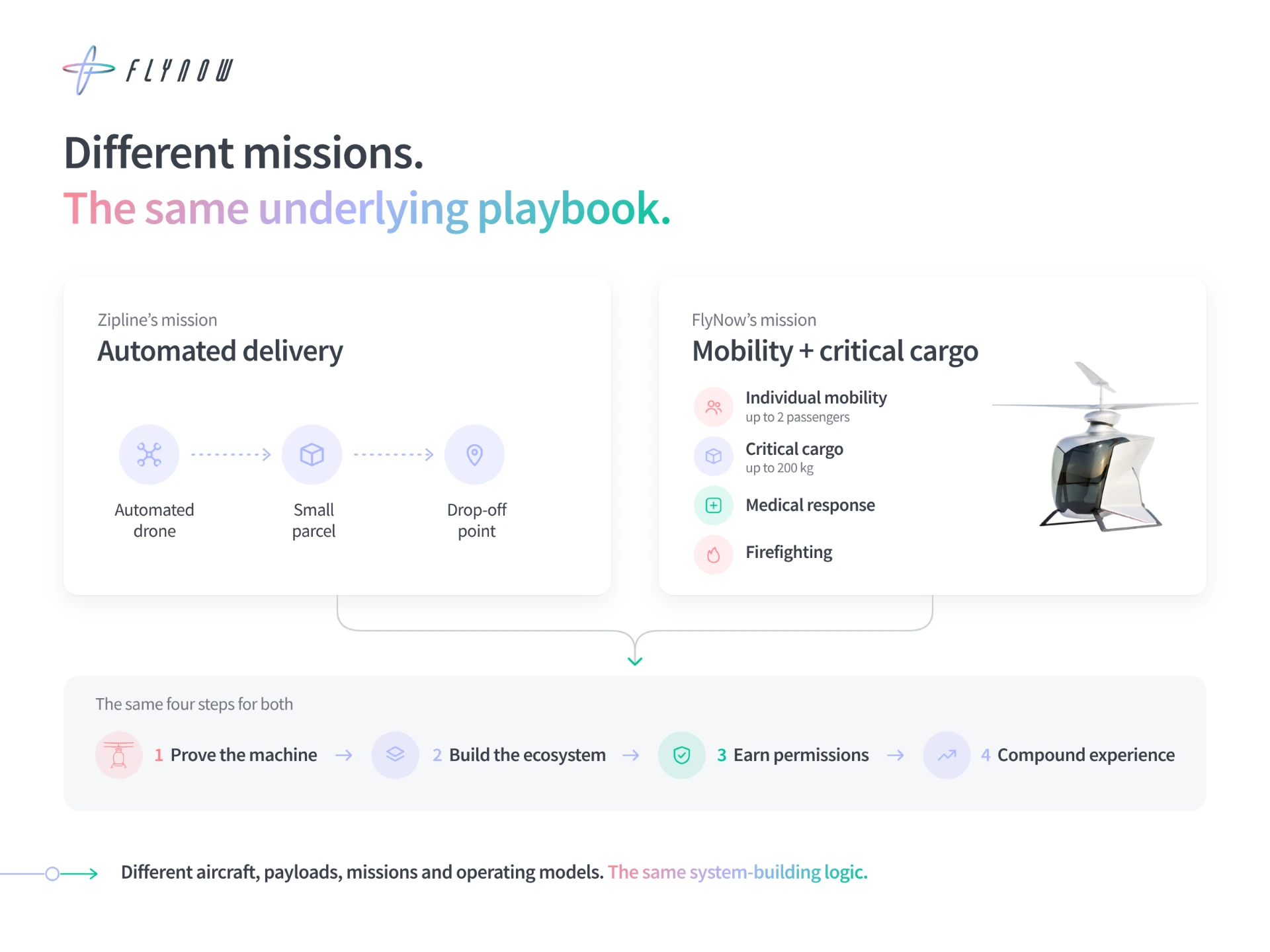
FlyNow is not competing with Zipline. Our aircraft, payloads, missions and operating models are different. Zipline has built a powerful automated delivery network. FlyNow is developing an integrated platform for individual air mobility and the movement of critical cargo — including medical response, firefighting, industrial logistics and pilgrimage-related operations.
Yet the underlying playbook is familiar: prove the machine, build the ecosystem, earn the permissions and compound operational experience. We are at an earlier point on that curve, with a further conviction of our own: the cost of manufacturing and operating must be addressed from the very beginning.
Our two contrarian bets
1. Automatic before autonomous
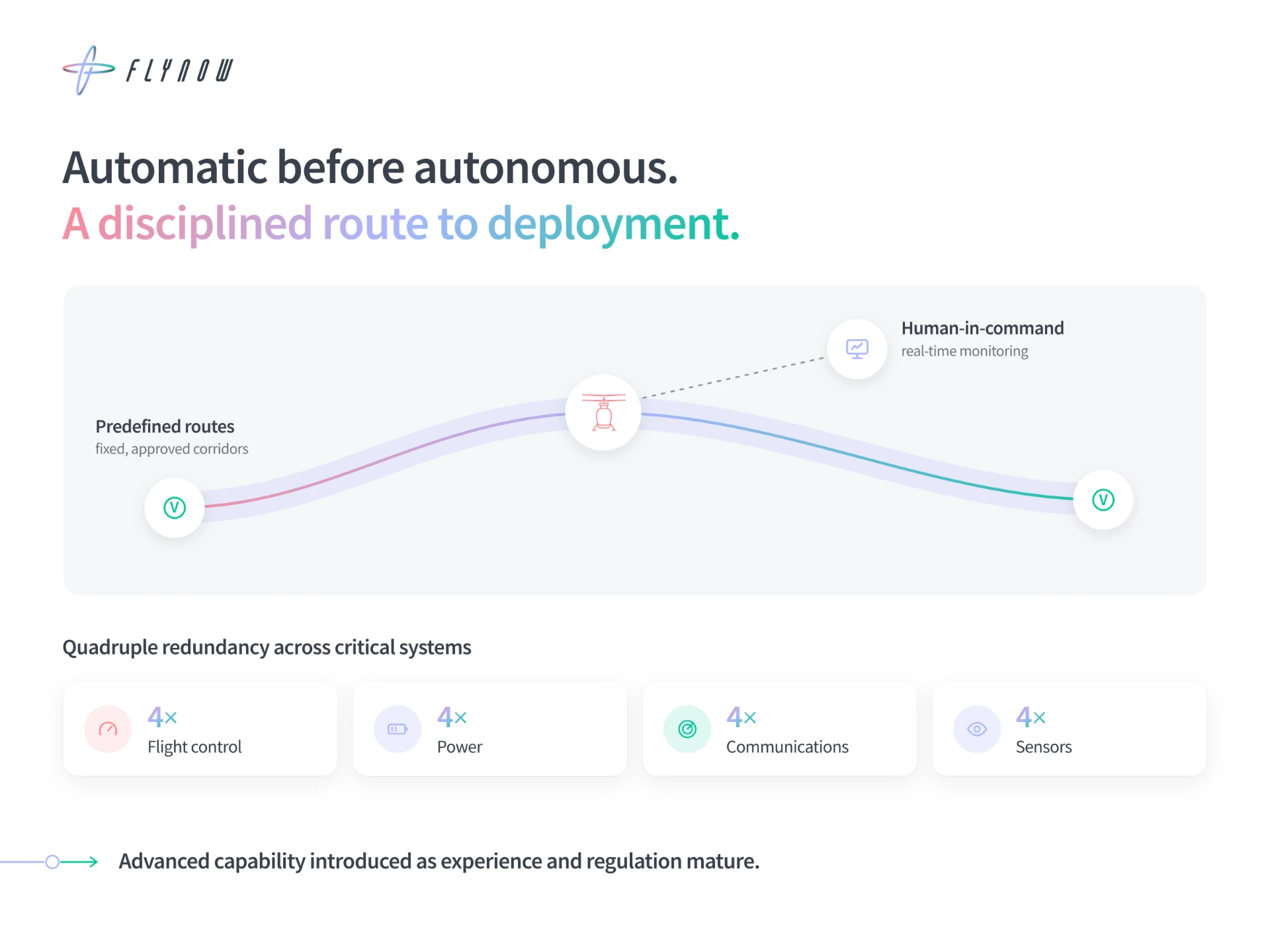
While much of the industry is racing towards full autonomy, FlyNow has deliberately chosen a different starting point: automatic, not autonomous. Our approach is built around predefined routes, human-in-command supervision and real-time monitoring, supported by quadruple redundancy across flight control, power, communications and sensors.
This is not a rejection of autonomy. It is a deliberate route to deployment: simplicity can support a faster certification pathway, safer failure management and lower costs. We believe advanced capability should be introduced in a disciplined way, as operational experience and the regulatory framework mature.
2. Engineer for automotive-scale production
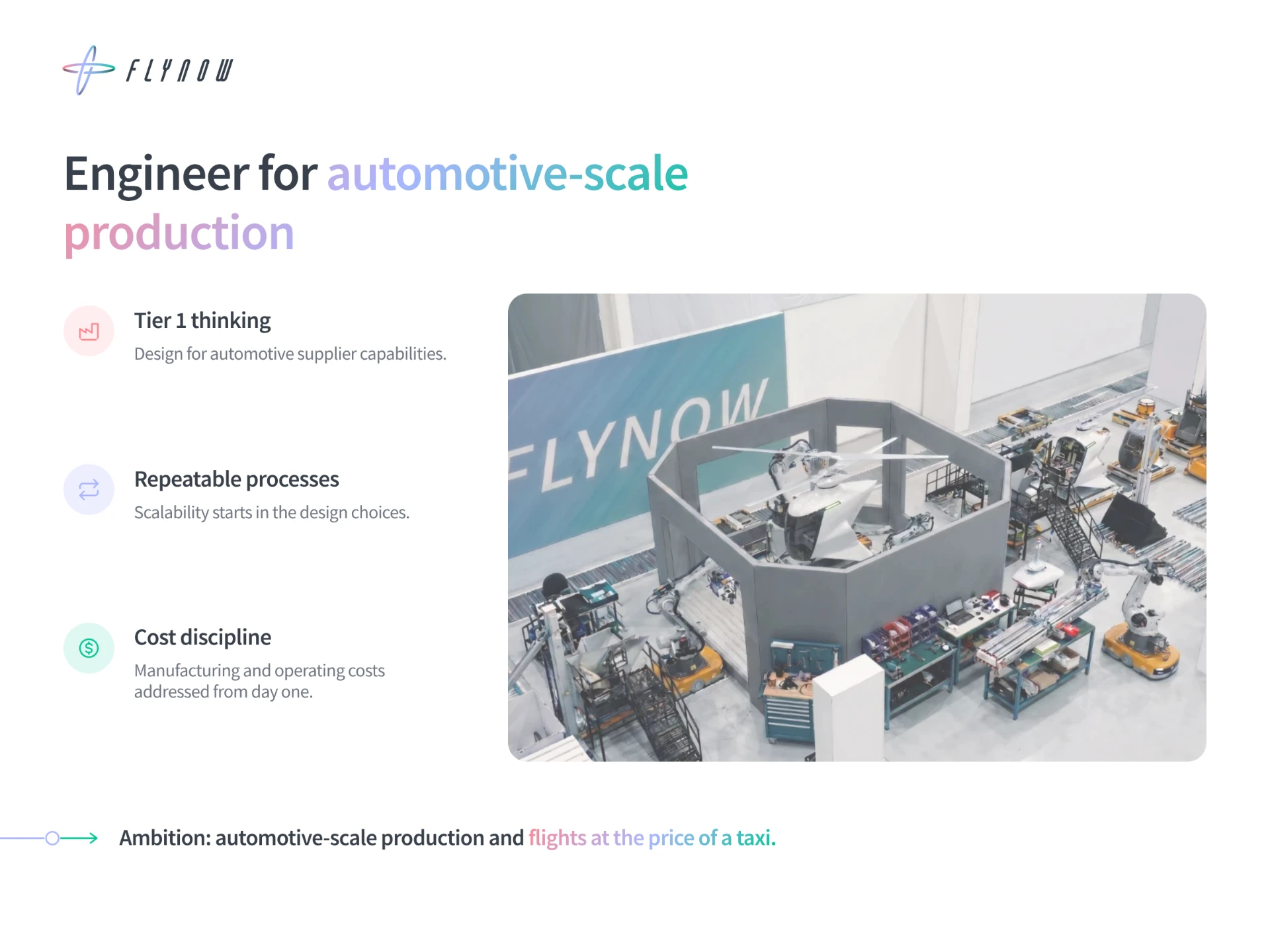
Our second bet comes from a lifetime spent around automotive manufacturing. Every part of the eCopter has been designed with the ambition that a Tier 1 automotive supplier can manufacture it.
Traditional aviation often relies on highly specialised, low-volume production. FlyNow is applying automotive thinking to the value chain: repeatable processes, scalable supplier capabilities and design choices intended to reduce manufacturing and operating costs. This is the cost curve the industry must address if “flights at the price of a taxi” are ever to become a viable business model rather than a slogan.
The returns are operational — and measurable
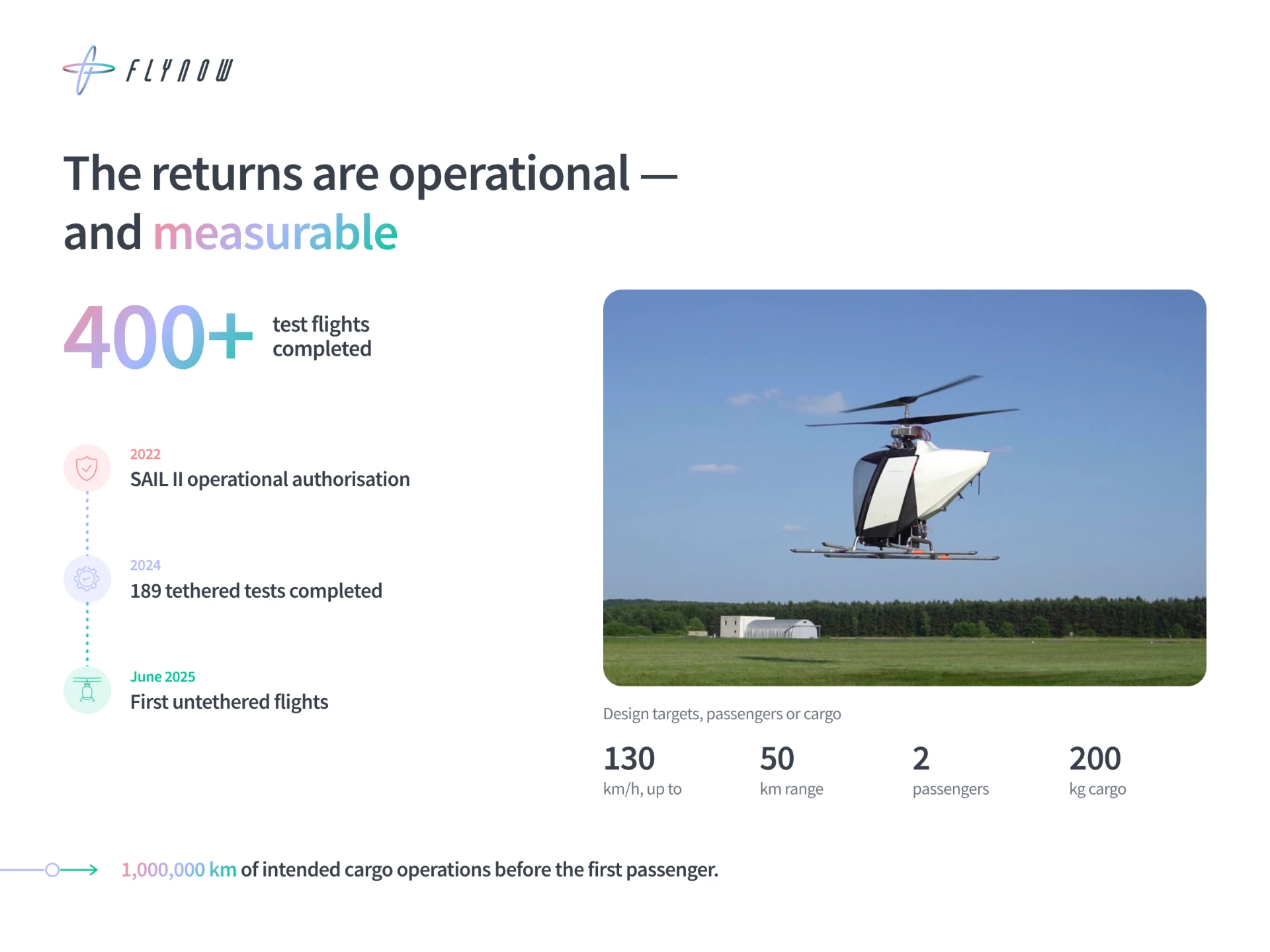
FlyNow’s progress is built on a step-by-step operational pathway. We have held operational authorisation under SAIL II since 2022, on a pathway that progresses towards SAIL IV. Our programme has completed more than 400 test flights, including 189 tethered tests completed in 2024 and our first untethered flights in June 2025.
The fully electric eCopter is designed for a cruising speed of up to 130 km/h and a range of 50 km. It is being developed to carry either two passengers or up to 200 kg of cargo, with quadruple redundancy across critical systems.
We have also set a clear operational principle: before carrying our first passenger, we intend to complete one million kilometres of cargo operations. We believe passenger operations must be built on a substantial foundation of proven performance. There should be no shortcuts — and we would not want them.
Alongside the aircraft, we are progressing partnerships and use cases across healthcare, emergency response, logistics and other critical sectors in the Kingdom.
Building the system around the aircraft
As Co-Founder and COO, I have put almost my entire personal fortune behind this mission. I lead FlyNow Arabia from Riyadh and lead SALAAM.earth, the founding alliance I established to bring together the wider Advanced Air Mobility ecosystem.
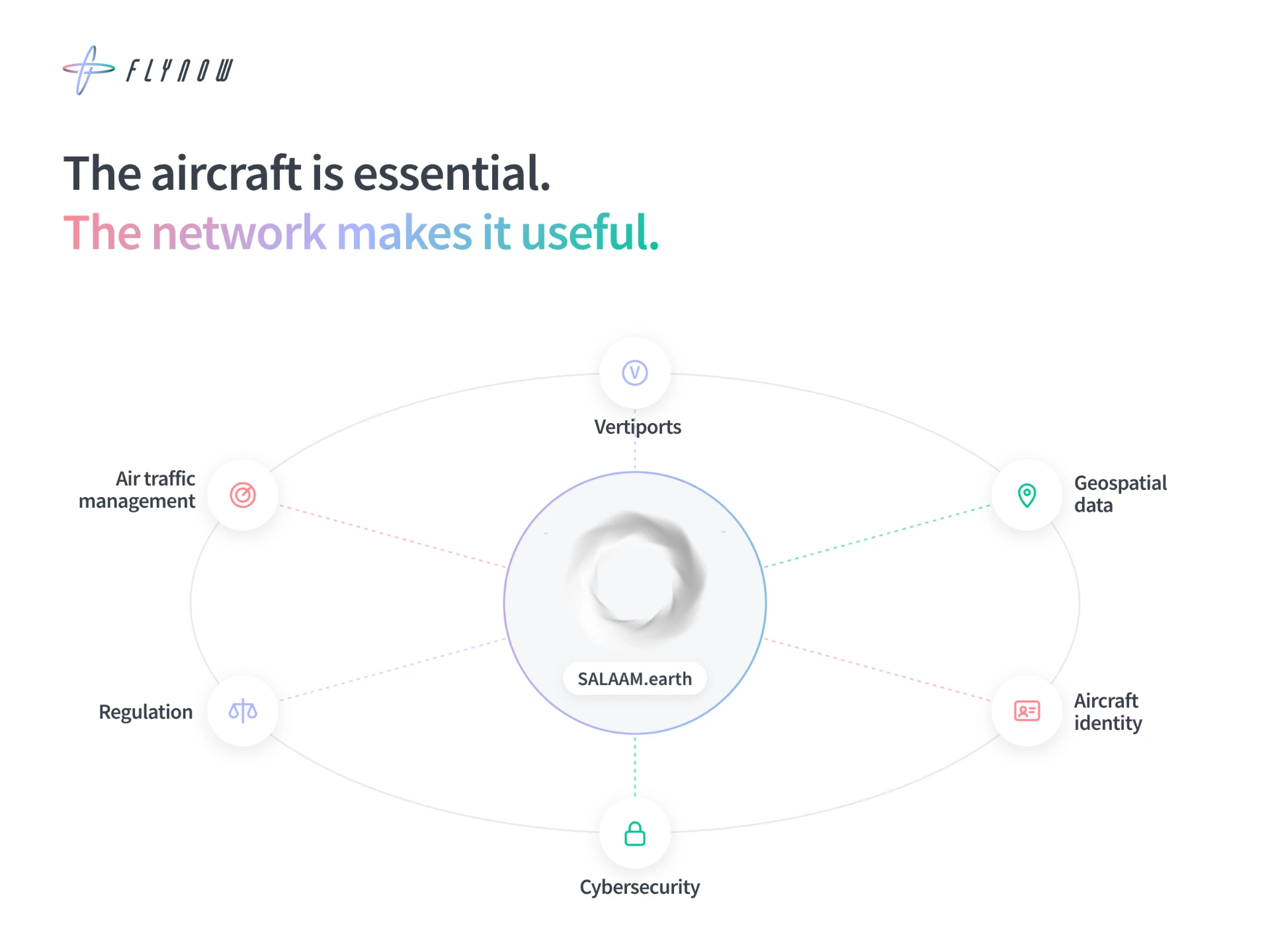
That ecosystem includes air traffic management, vertiports, geospatial data, regulation, cybersecurity and aircraft identity. These are not optional additions to an aircraft program. They are essential building blocks of a functioning low-altitude mobility system.
An aircraft alone does not create a scalable business. The integrated, made-to-order ecosystem does. This is why FlyNow’s ambition extends beyond becoming an aircraft manufacturer: we are working to help build the infrastructure layer that enables Advanced Air Mobility to operate safely, commercially and at scale.
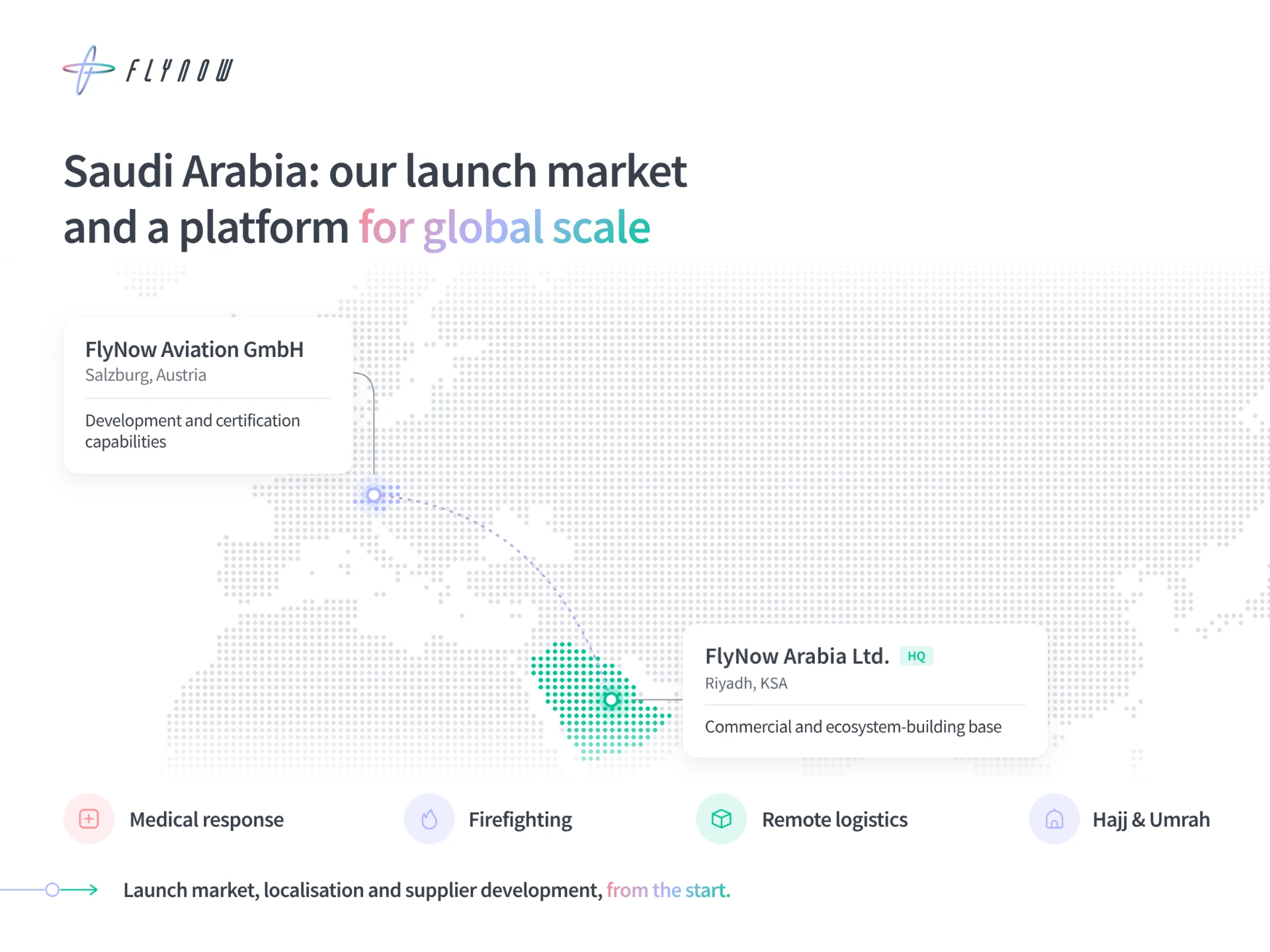
Saudi Arabia: our launch market and a platform for global scale
FlyNow has chosen Saudi Arabia as its launch market deliberately. The Kingdom is not simply a place to introduce a new aircraft; it is a market with the ambition, investment capacity and national transformation agenda to help shape an entirely new mobility sector. Under Vision 2030, Saudi Arabia is developing the infrastructure, regulatory frameworks and innovation environment needed to make Advanced Air Mobility a practical part of its future transport and logistics system.
The opportunity is also grounded in real operational needs. Across the Kingdom, there are demanding use cases in emergency medical response, firefighting, industrial and remote-site logistics, and the movement of critical supplies — alongside the longer-term opportunity for individual passenger mobility. Hajj and Umrah create additional requirements for reliable, responsive logistics and emergency services at exceptional scale. These are meaningful starting points: applications where time, access and operational reliability matter.
Riyadh is the home of FlyNow Arabia and the center of our commercial and ecosystem-building activities. From here, we are working with public- and private-sector stakeholders to develop the partnerships, operating models and enabling infrastructure required for deployment. Our development and certification capabilities in Austria complement this Saudi base, connecting the Kingdom to European engineering and regulatory expertise.
We see Saudi Arabia as both our first market and a launchpad. The ambition is to establish a model that can be proven in the Kingdom, developed with Saudi partners and ultimately expanded into other markets. That is why localisation, supplier development, operational capability and a strong domestic ecosystem are integral to our strategy — not items to be considered after the aircraft is ready.
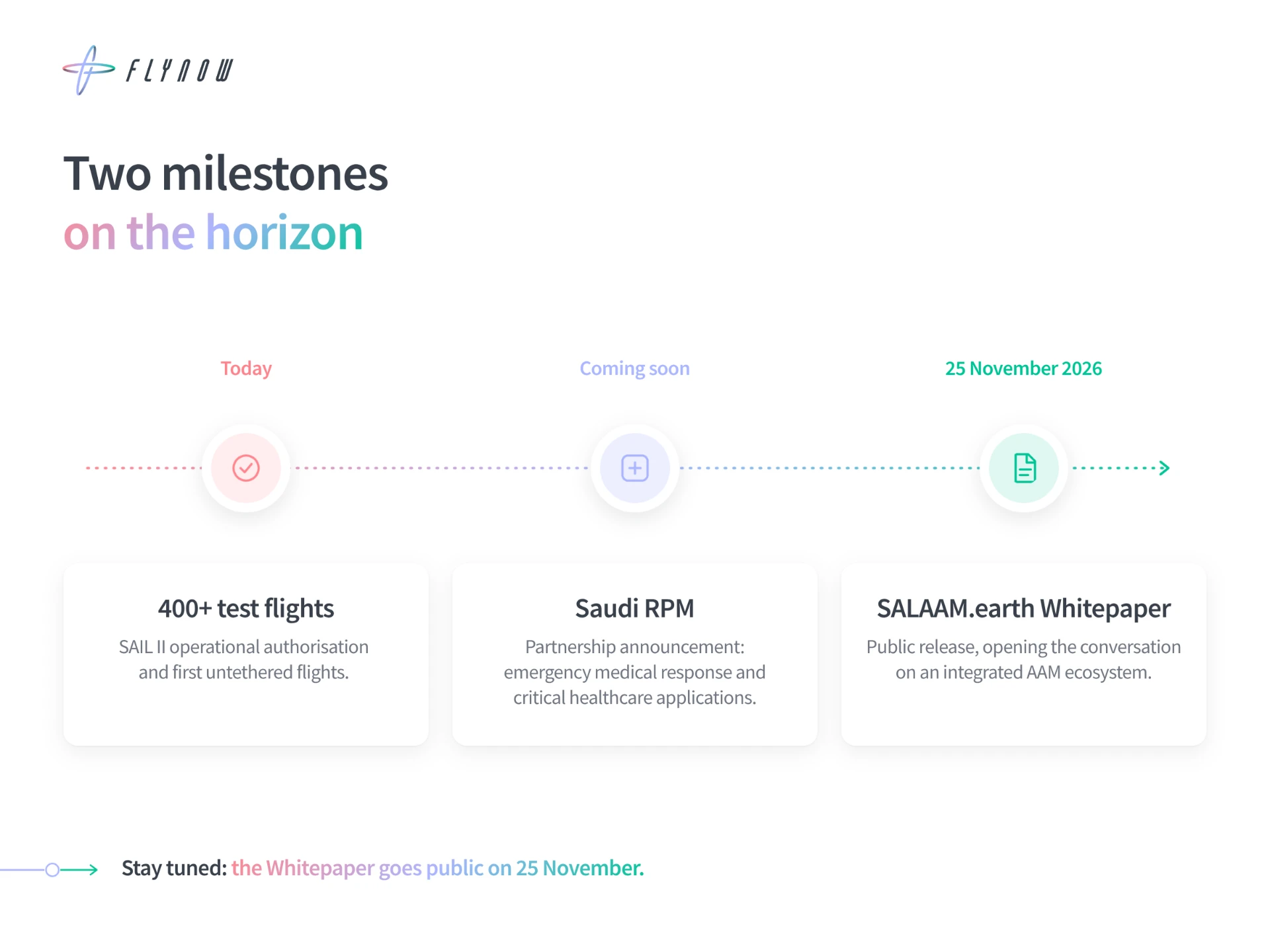
Two milestones on the horizon
Soon we will publicly announce our partnership with Saudi RPM, highlighting the role the eCopter can play in supporting emergency medical response and other critical healthcare applications. Stay tuned!
On 25 November, SALAAM.earth will officially publish its Whitepaper. Until now, the document has been shared only with government officials. Its public release is an important step towards opening the wider conversation about the architecture, requirements and opportunities of an integrated Advanced Air Mobility ecosystem in Saudi Arabia.
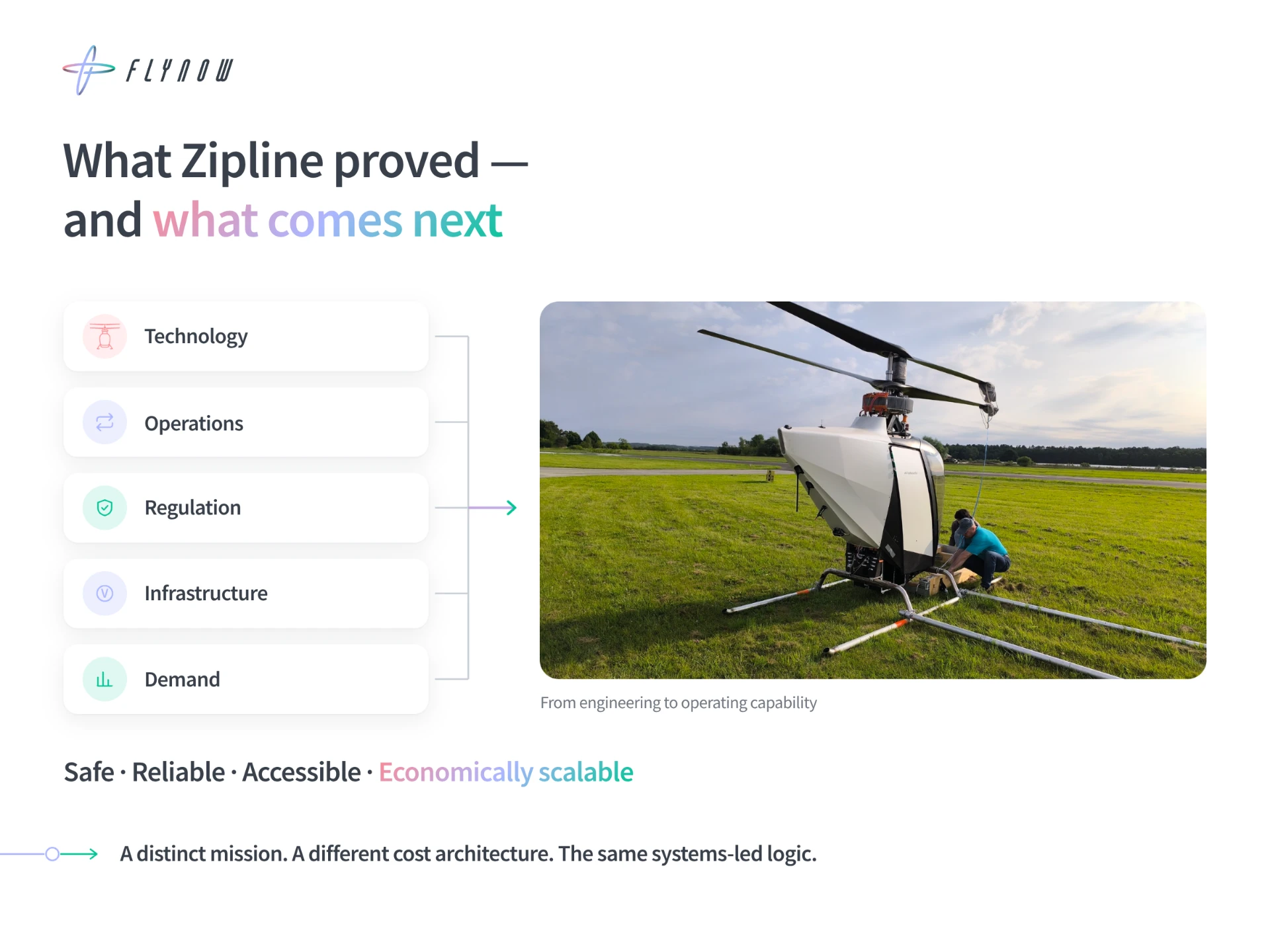
What Zipline proved — and what comes next
Zipline’s story demonstrates that the enduring value in this sector is created when technology, operations, regulation, infrastructure and demand come together. The aircraft is essential, but it is only one part of the equation.
FlyNow is following that same systems-led logic, while pursuing a distinct mission and a different cost architecture. We are building from Saudi Arabia, with an ambition to develop capabilities, partnerships and infrastructure that can serve the Kingdom and reach international markets.
The opportunity is not simply to put a new aircraft in the sky. It is to help establish a new layer of mobility and logistics — one that is safe, reliable, accessible and economically scalable. That is the work ahead, and that is where we believe lasting value will be created.
An invitation to build what comes next
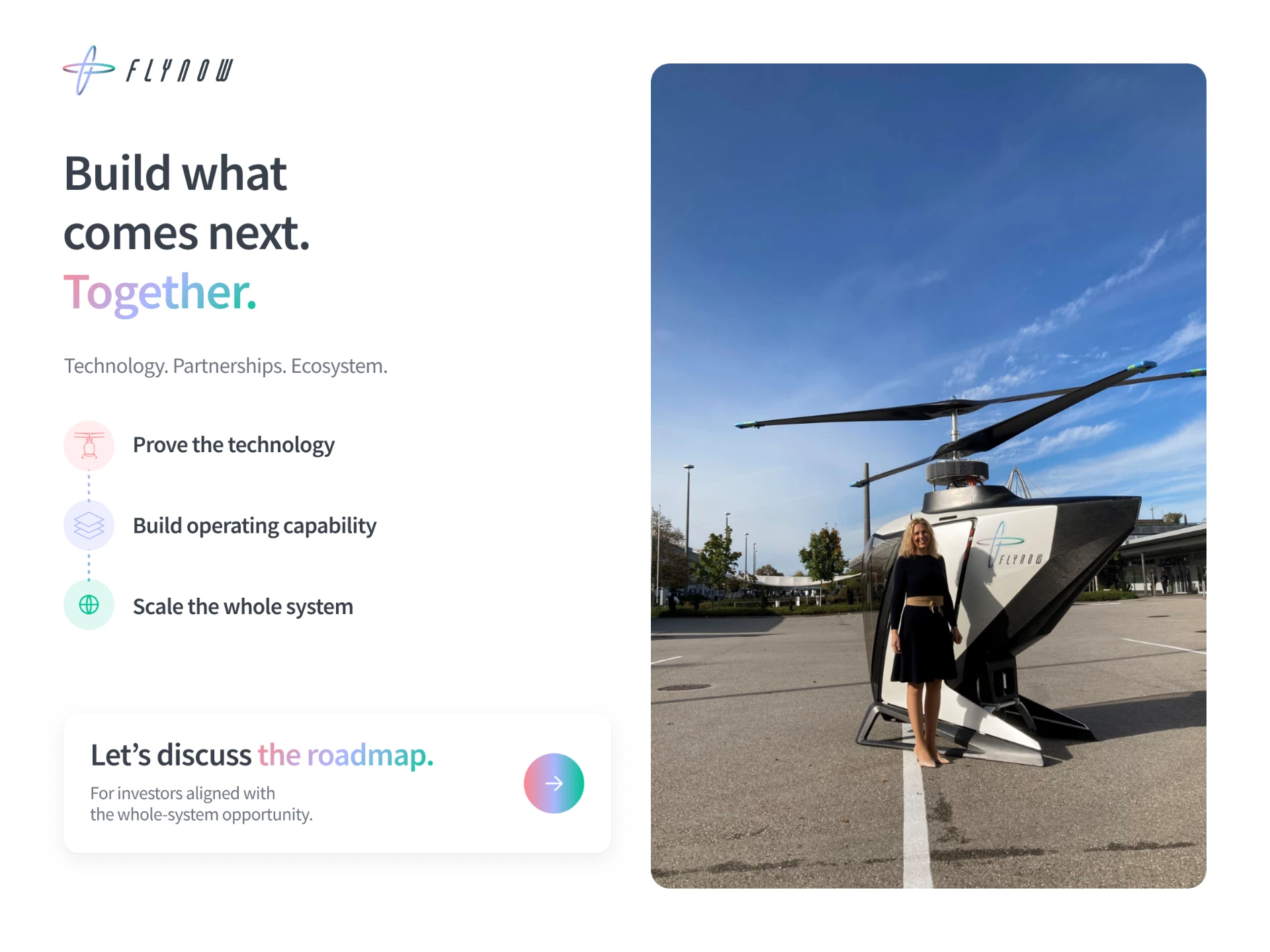
For investors who share our conviction that the future of Advanced Air Mobility will be built by those who create the whole system (not just the aircraft) we would welcome a conversation. FlyNow is progressing its technology, partnerships and ecosystem from a strategically important launch market, Saudi Arabia, and is preparing for the next stage of growth. If this ambition aligns with your investment focus, we would be pleased to share our roadmap and discuss where we are heading.